



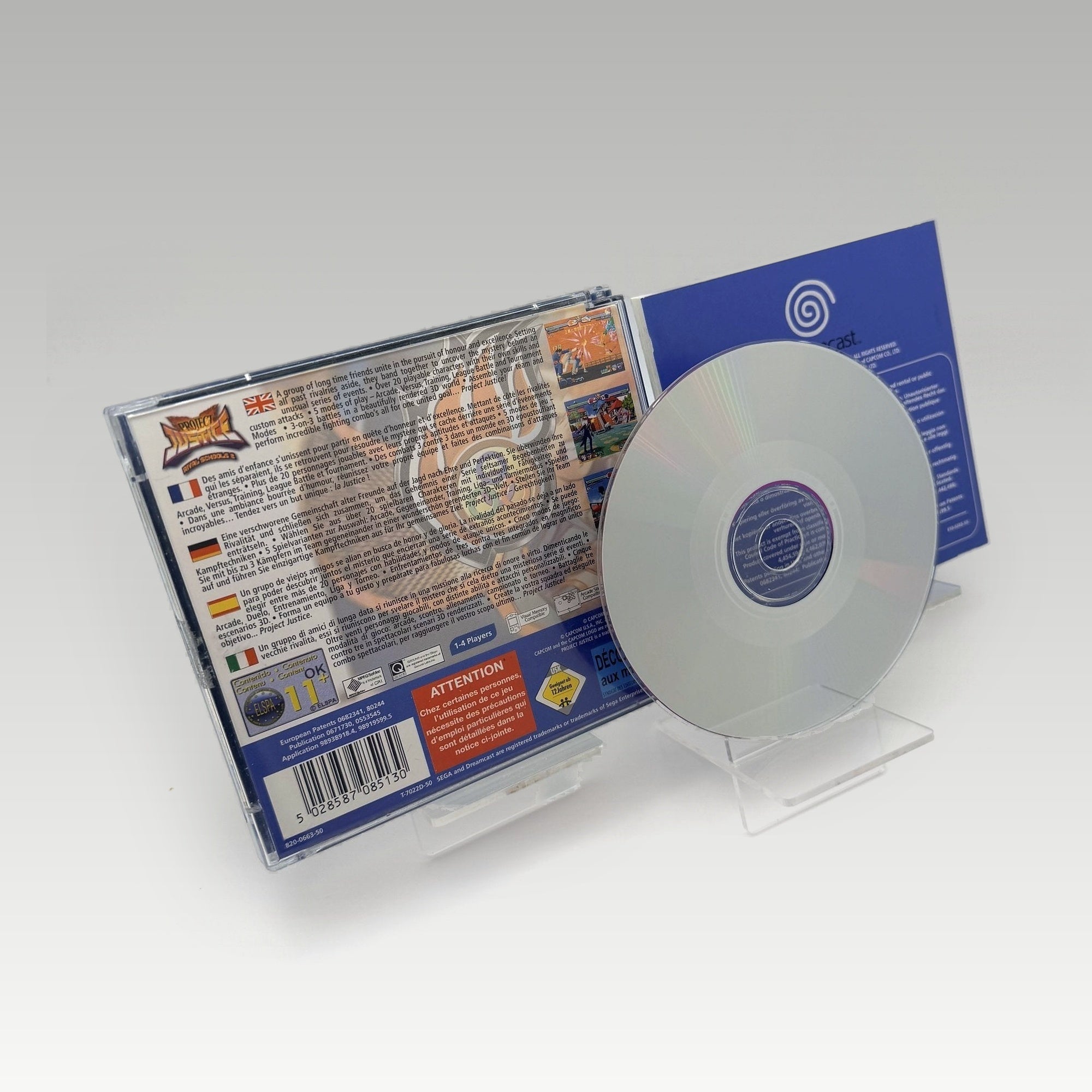
Project Justice
Pairs well with
In stock! Ships within 1-2 business days.
Free Shipping on orders over $200
NZ's Best Value Game Store
Earn Store Credits on every purchase
No questions asked 30 day returns
Preview

Product details
About This Game
Project Justice
Platform: Sega Dreamcast
Region: PAL
Release Year: 2000
Publisher: Capcom
Genres: Fighting
Modes: Single player, Multiplayer
Perspective: Side view
Age Restriction: M
Ratings: Player: 81/100
Condition: Pre-Loved. Pre-owned, tested and working. Normal wear consistent with use.
Includes: CIB
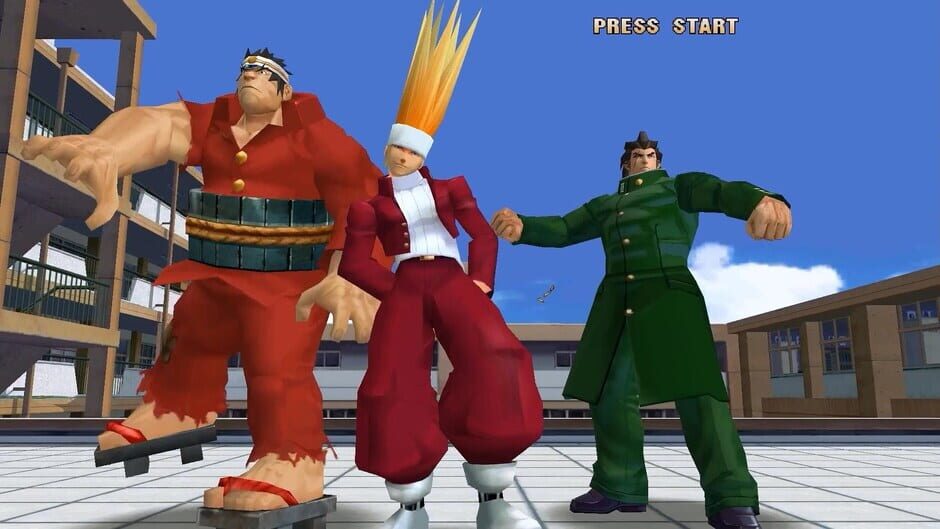
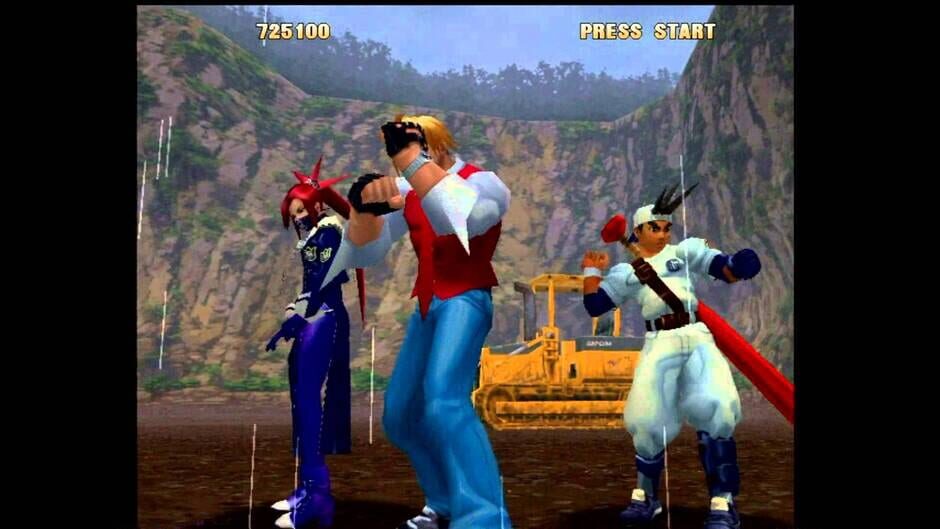
Project Justice is the sequel to Rival Schools: United By Fate. Project Justice's fighting system is lifted from the original Rival Schools, with some notable changes. The game continues to be a team fighter, but has teams of three characters instead of two. This allows another Team-Up attack to be used in a fight, but also adds a new type of attack, the Party-Up, initiated by pressing any three attack buttons. The Party-Up is a three-person attack that varies based on what school the character initiating the attack is from. The additional partner also allows players to cancel an opponent's Team-Up Special by inputting a Team-Up command of their own. This initiates a short fighting sequence between one character from each team. If the person initiating the sequence gets the first successful hit in during the sequence before time runs out, the Team-Up they are caught in will be canceled, and the game switches back to the main fight; if the opposing player gets the first hit or time runs out, the Team-Up continues as usual. Additionally, the 'vigor' meter in Project Justice is limited to 5 levels (down from 9 in Rival Schools), with Party-Ups requiring all 5 levels, Team-Ups continuing to cost two levels, and any attempts (successful or not) to cancel a Team-Up costing one level. Also carrying over from the first game, the Dreamcast port of Project Justice in Japan includes a character creation mode that allows a player to create their own fighters who can be used in all modes except for single-player. However, the character creation in Project Justice is packaged as a board game, taking place during an inter-school festival, rather than a date sim game like in Rival Schools. As with School Life Mode in the original Rival Schools, though, this boardgame is not included in non-Japanese ports of Project Justice due to the amount of time it would take to translate the mode. Instead, several unlockable sub-characters were included in these ports, built from the character creation parts in the Japanese version.
Storyline: One year has passed since the events of Rival Schools: United By Fate and that things have gone back to normal in Aoharu City. Batsu Ichimonji, Hinata Wakaba, Kyosuke Kagami, and the rest of the fighters had resumed their normal school lives and that all of them had enjoyed the calm peace that came after their last adventure, but the peace itself doesn't last for long and that the fighters would soon find themselves getting involved in a new struggle. Kurow Kirishima: a cold-hearted and ruthless ninja assassin from a mysterious group known only as the "Reverse Society" has his sight set on the Imawano family and plans to eliminate them and their allies so that he can prepare for the advancement of his own ambition to rule Japan. To this end, he attacks Raizo Imawano: the principal of Justice High and father to Batsu, so that he can easily put him out of commission and not have any interference come from him. Secondly, he sends both his older sister Yurika Kirishima and his loyal subordinate Momo Karuizawa into the ranks of the fighters so that the two of them can cause tension and distrust to occur between the friends. His third plot involves brainwashing Gedo gang leader Daigo Kazama so that he can order him into forcing his gang to attack various schools in order to cause even more tension to occur. Lastly, Kurow himself plans to destroy Batsu's reputation by disguising himself as Batsu's doppelganger (named Vatsu) so that he can attack the fighters and make them believe that Batsu is behind it. Batsu and his friends must fight back against the evil plot of Kurow and attempt to not let their friendship get destroyed by the conspiracy of a deadly ninja assassin.
Shipping & Returns
We ship all orders within 1-2 business days from New Zealand. Free shipping on orders over $200 NZD. Returns accepted within 30 days of delivery.
Condition Guide
Pre-Loved: Pre-owned, tested and working. Normal wear consistent with use.
New / Sealed: Brand new, factory sealed in original packaging.
New : Brand new, but not sealed (common in Aus & NZ). DLC's unused.
Refurbished: Professionally restored to working condition.
CIB: Complete In Box — includes game disc, case, and manual.
No Manual: Includes game disc and case only.
Loose: Game disc only, no case or manual.
Ex-Rental: Previously rented out, with visual stickers.

New / Sealed
Brand new, in original packaging, never opened.

New
Brand new, never played, DLC's unused… but seal removed.

Complete
CIB means Complete In Box, and includes the Box, Game and Manual. May include other DLCs of unknown usage.

No Manual
Includes the Box and Game, but the Manual is missing.

Loose
Just the game itself, will be shipped in a protective sleeve.

Ex-Rental
Previously rented out, with visual stickers.
FAQs
Please read our FAQs page to find out more.
What does CIB mean?
Complete In Box. Generally means an item has it's original case and manual. If items are not CIB, you'll see little badges of Loose or No Manual on them.
Do I need to worry about Regions?
For modern consoles (PS3 / 4 / 5, Xbox One / X, Switch / 2) you don't need to panic as they will play games from any region.
For older consoles, you need to ensure your console matches the game. The majority of our games will be PAL, which is the NZ standard. Look-out for rare titles that are NTSC (US / Canada) or NTSC-J (Japan / Asia) releases.
If you're not sure, please ask!
How do I get Free Shipping?
Yappa+ Subscribers get Free Shipping on every order. If you're not ready to commit, then you qualify for orders over $200 (may exclude some bulky items like consoles etc...).
Tell me about Store Credits...
You will earn $1 in Store Credits for every $50 you spend. Yappa+ Members earn at double the rate. Store Credits never expire, and are available to use at Checkout whenever you fancy. Stack 'em, or Spend 'em... your call.
Do you accept Returns?
Absolutely, if a game is genuinely faulty then just let us know and we will fix things up for you. We do our upmost to ensure games are sent to you in the best condition possible, and we will resurface disks if they need it. We do need items returned in their original condition.
Will you Buy my games?
100%, please get in touch!
We are constantly looking for new stock, so drop us a line and we will work out a deal with you. We try to pay the best in market (definitely don't take them to the pawn broker!) and happy to take in large collections.
We will be launching a new section of the site to make this easier super soon.
